
HEALTHCARE & LIFE SCIENCES
The purpose of the space.
The systems behind it.
Before testing a room in an occupied hospital or lab, we work with the people who use it. Together we establish what conditions the room needs, when testing can happen and what facilities staff need to see before returning it to service.
THE FACILITY & ITS PURPOSE
Start with the conditions
the work requires.
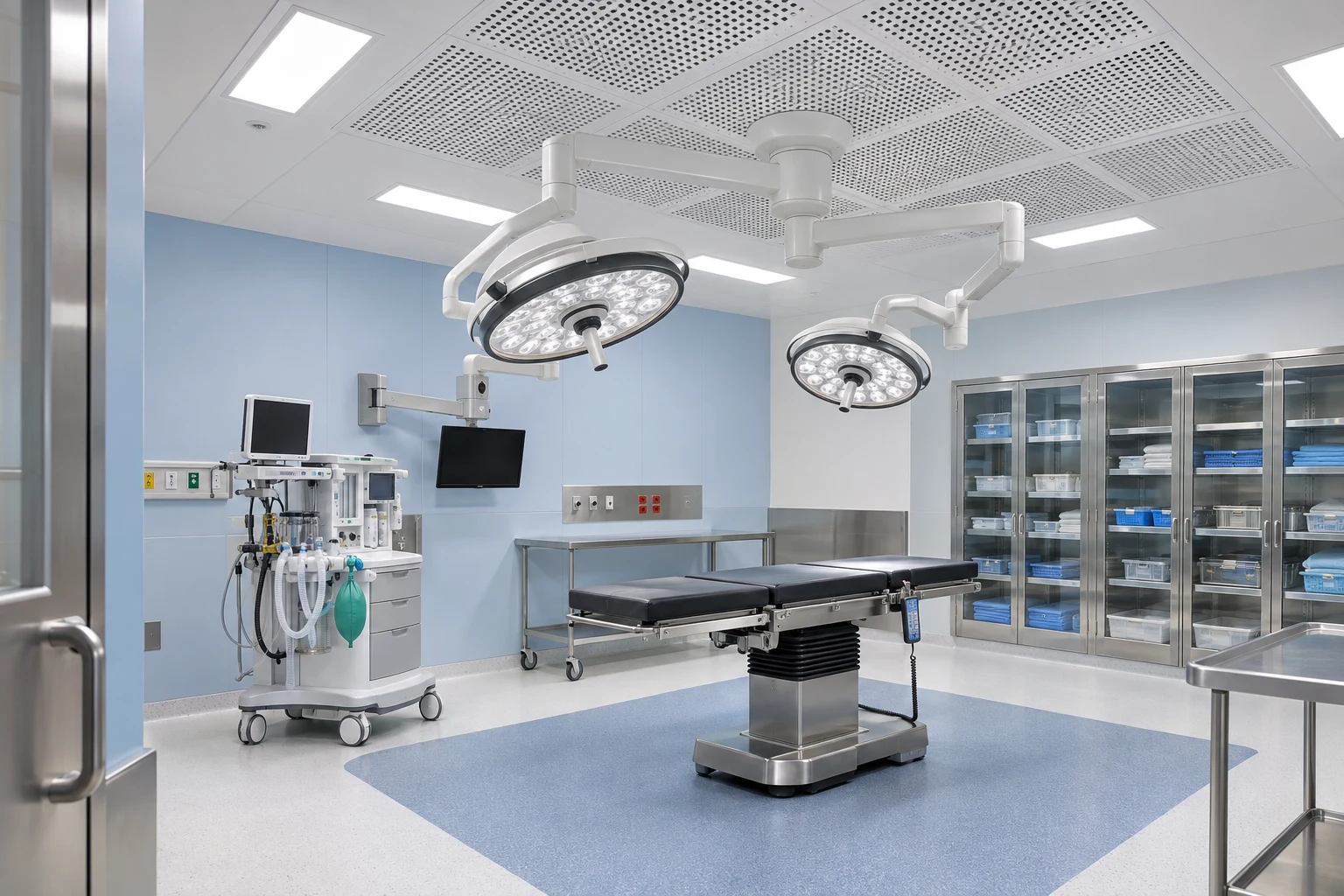
In a hospital, start with the room and what happens on the other side of its doors. The applicable Facility Guidelines Institute (FGI) criteria inform room use and adjacencies. ANSI/ASHRAE/ASHE Standard 170 addresses ventilation by space type. An operating room is designed to be positive to adjoining spaces. A soiled decontamination room draws air inward. We confirm the applicable edition and pressure relationships against the project design before testing.
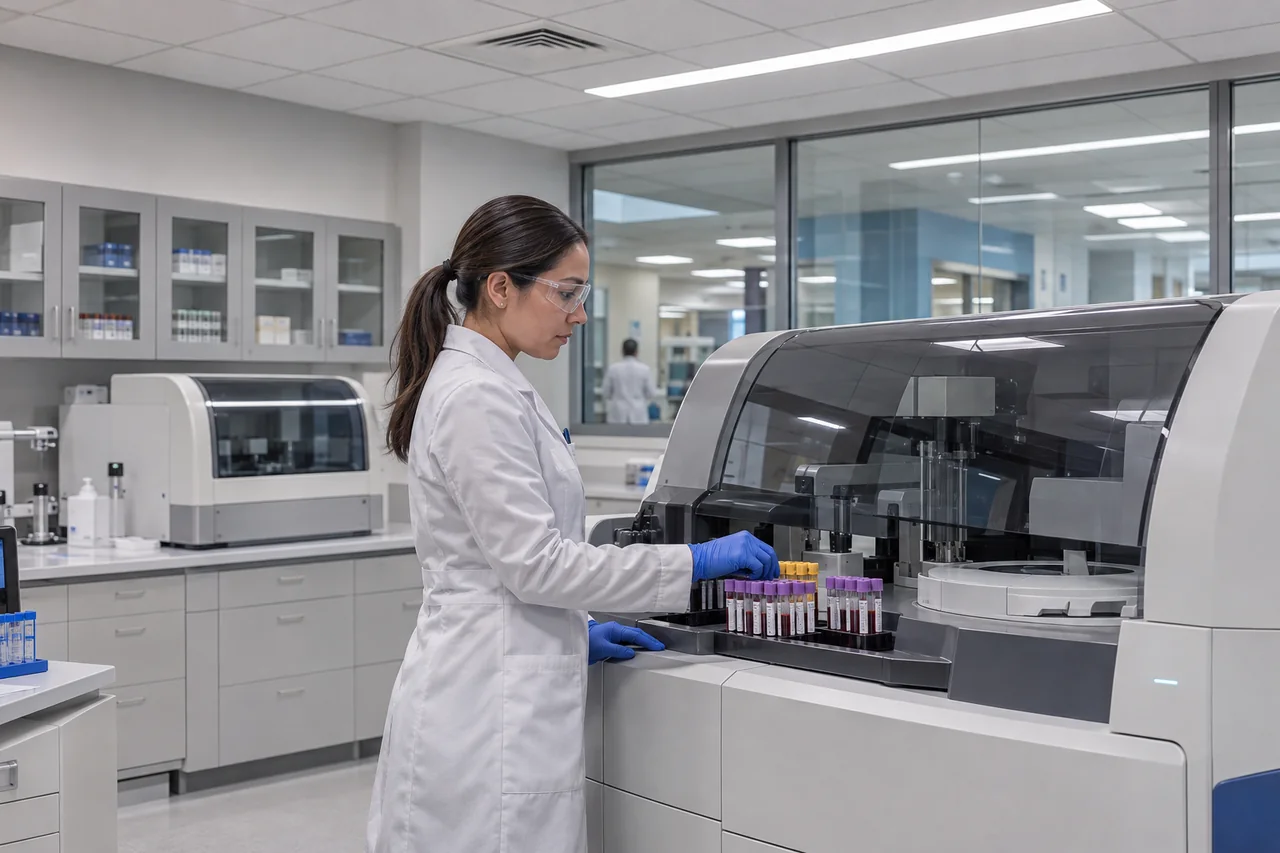
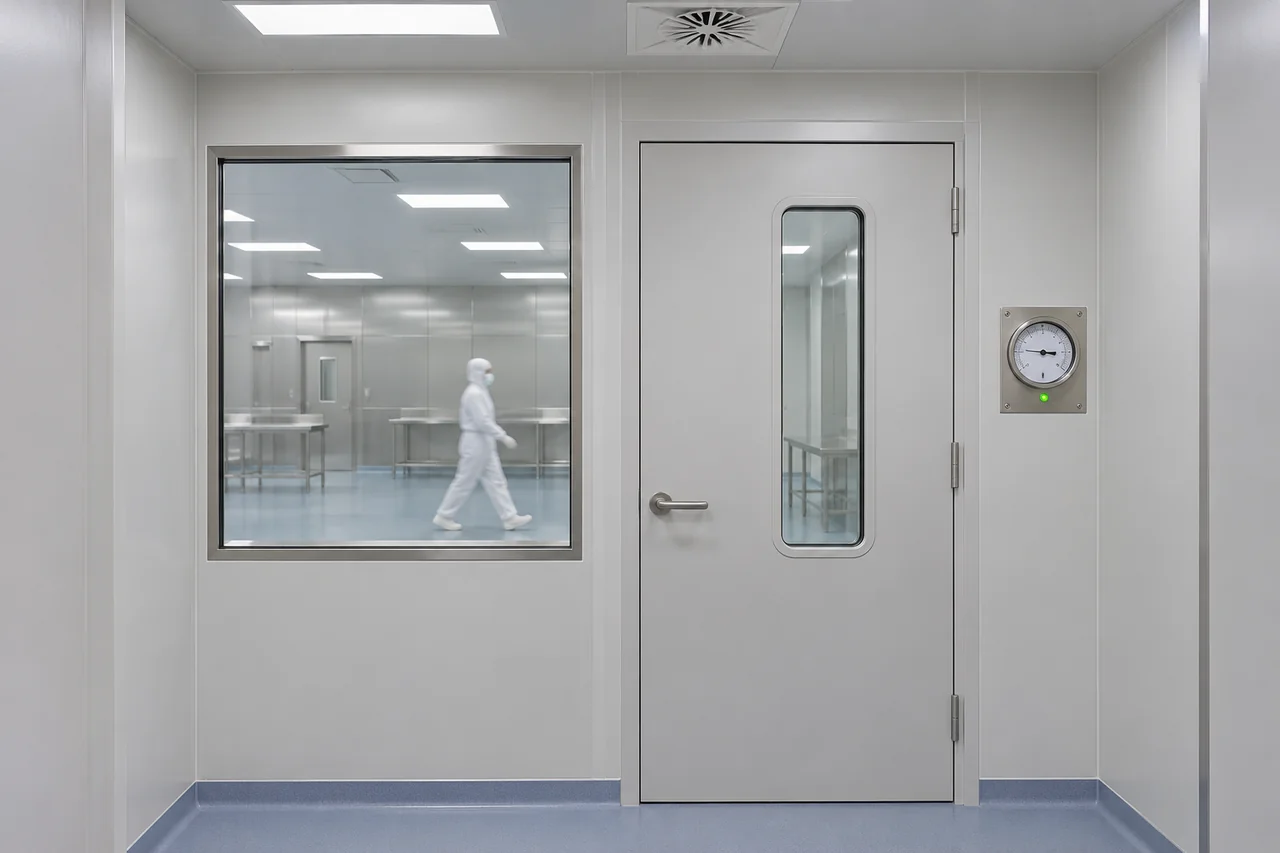
For a clinical laboratory, we start with the work performed and the exhaust and pressure relationships it requires. For a pharmaceutical cleanroom with a specified ISO class, ISO 14644-1 classifies air cleanliness by airborne particle concentration. SLA coordinates HVAC and controls testing with the owner’s quality team so the field records support the facility’s qualification plan.
FROM THE FIELD · HAWAIʻI
What was the sensor actually measuring?
Marcus Myers on a healthcare renovation before he joined Streamline Automation
We were in final commissioning when the trends sent us back above the ceiling. Many of the variable air volume (VAV) boxes had arrived without factory-installed discharge air temperature sensors. The sensors had since been added in the field. As we checked the boxes one by one, a few struggled to reach setpoint. On others, the temperature kept swinging back and forth.
Above the ceiling, we could see something the trends couldn’t show us. Some sensors sat closer to the center of the airstream. Others were off to one side. Ceiling clearances varied from room to room. Before adjusting a reading, we needed to know whether the air passing that sensor represented what the box was delivering.
In Hawaiʻi, it can be 80°F outside with a breeze you’d love to let in. That air also carries moisture. When it reaches a surface colder than its dew point, condensation can form. Discharge air temperature was one piece of the picture, and the operators needed to be able to trust it.
The owner, engineer, contractor and controls team agreed on a consistent sensor location, and most of the sensors were moved. It took time to get back above those ceilings. What I remember is that everybody was willing to do it.
That job changed how I approach a repeated field change. I want the method of procedure to be something the installer can actually use. Walk the first box together, verify the reading, and photograph the agreed location. Then answer the question the next installer is bound to have: If it won’t fit above this ceiling, who do I call before I drill?
It took me years of looking at trends and then standing beside the people who install and operate the equipment to learn which question to ask next. I’m still learning. Sometimes the person who teaches me the most is the installer who can point to the exact spot above a ceiling and explain why the detail won’t fit. My job is to get that person and the people who can make the decision looking at the same box, early enough to spare the owner another round of rework.
HOW THE WORK CONNECTS
From a requirement
to a verified response.
Mike brings controls and instrumentation experience to the supply, return and exhaust systems that maintain room pressure. He traces a pressure reading from the sensor to the operator’s screen and checks the alarm response.
Marcus brings hospital and laboratory Cx experience and three years as Education Chair of the ISPE Southwest Chapter. He coordinates the test sequence with facilities, infection prevention and laboratory staff so each team knows when testing can proceed and what evidence it needs for return to service.
PROJECT EXPERIENCE
Care spaces.
Laboratories and process facilities.
Marcus’s career spans inpatient hospitals, outpatient clinics, medical office buildings (MOBs), imaging facilities and clinical laboratories.
Memorial Hospital West* · Assignments included operating rooms, interventional radiology, a cardiac catheterization lab and clinic space. TOCA MRI Facility* · Diagnostic imaging facility.
Roche/Ventana · Tucson, Arizona. Mike’s SLA controls work included Large Bottle Systems for cancer-screening reagent formulation, filling stations and waste-system support.
Vancouver Clinic laboratory* · Vancouver, Washington. Cx of HVAC, controls, lighting and plumbing within an existing clinical/pathology laboratory. Rose Medical Center* · Denver, Colorado. Operating-room HVAC retro-Cx.
Via Christi St. Joseph and St. Francis hospitals* · Wichita, Kansas. Hospital-renovation Cx. St. Francis Medical Center* · Honolulu, Hawaii. Cx project management for a hospital addition and connection of a new central plant to the existing facility.
Kaiser Permanente* · Honolulu, Hawaii, and Denver, Colorado. Separate medical-office VAV/electrical-gear replacement and Cyber Building renovation assignments.
Baxter Healthcare* · Cleveland, Mississippi. Audit, retrofit and optimization work for a manufacturing plant. Jim Pattison Pavilion* · Vancouver, British Columbia. Healthcare energy audit.
Explore healthcare and clinical project details
LET’S CONNECT
Which rooms need testing, and when can your team release them?
* Experience gained with previous firms, including project delivery and leadership roles.