
Make the requirements usable.
Define system boundaries, sequences, test conditions, responsibilities and the evidence needed at each milestone.
 StreamlineAutomation
COMMISSIONING / SERVICE OVERVIEW
Commissioning for new buildings, existing facilities and continued operation.
Which system are you being asked to accept? We help your team agree on what to test and who needs to see it. Your operators can then trace the recommendation to a field result and see what still needs attention.
THE PURPOSE OF Cx
A completed checklist matters when it helps the team make a better decision. Will the facility be ready? Will the systems work together? Will the operators understand what they are taking over?
We bring your operators into planning alongside designers, contractors and vendors. Together we agree what the facility must do, follow the tests and record who owns each correction or deferred check. Your team can see what is ready to accept.
Mechanical. Electrical. Plumbing. Controls. Enclosure. The interfaces between them are part of the work.
Total building Cx coordinates the selected systems and their interfaces. New-construction, existing-building and ongoing Cx describe when and how that process is applied. Monitoring supports investigation and follow-through. Enclosure, electrical and data verification add discipline-specific scope to the project’s Cx plan.
Marcus Myers, SLA Partner & CTO, brings Cx delivery, commissioning education and active standards leadership across healthcare, laboratories, campuses, commercial and residential buildings, aviation, central plants and industrial facilities. That experience connects the project requirements with field verification and the people who will operate the facility.
Explore the project experience →SSPC 300 is ASHRAE’s Standing Standards Project Committee for commissioning. It coordinates the development and maintenance of Cx standards and guidelines. Guidelines 0.3P, 1.6P and 1.7P are in development. Meet the people behind SLA →
NEW CONSTRUCTION Cx
From requirements to a working facilityThe time to define success is before the equipment arrives and the testing schedule gets tight.
We help the owner establish the Owner’s Project Requirements, review how the design team’s Basis of Design addresses them, and develop a Cx plan that connects the systems, responsibilities and acceptance criteria. That gives design reviews, submittals, field observations and testing a common purpose.
As construction progresses, we work with the team on installation quality, startup, controls and testing readiness. Functional and integrated testing then demonstrate the required response, including the operating modes and interfaces that matter to the facility. We track findings through the responsible team’s response, correction and verification.

Define system boundaries, sequences, test conditions, responsibilities and the evidence needed at each milestone.
A pump command, a running indication and demonstrated flow are different observations. The test needs to connect them.
Plan operator training early, verify its delivery, and assemble a usable Systems Manual with verified results, operating information and assigned open or seasonal work.
The result is a clear record of what was demonstrated, what was corrected and what still requires attention. The owner can make acceptance decisions with the evidence in view.
EXISTING BUILDING Cx · EBCx
Understand the building you have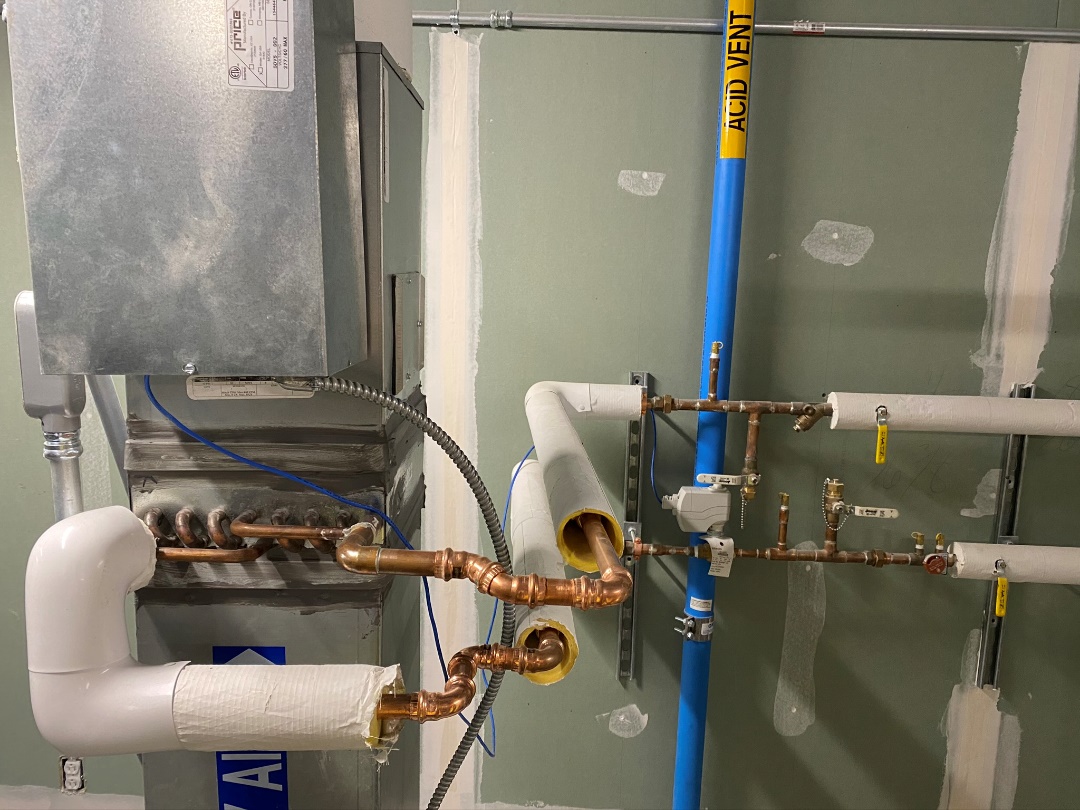
A trend may point to a problem. Looking at the installation helps the team understand why it is happening.
Buildings change. Occupancy, equipment, schedules and expectations do too.
EBCx starts with the owner’s Current Facility Requirements and the people who operate the building. We review records, inspect systems, examine sequences and trends, and investigate the conditions behind comfort complaints, inefficient operation or unreliable performance.
Renovations and equipment replacements can require both existing-system investigation and Cx of new work. We define those boundaries and the applicable owner requirements in the project plan.
The investigation becomes a prioritized improvement plan, distinguishing operating adjustments, maintenance and repair needs, and potential capital work. With the owner and responsible teams, we coordinate the work around occupancy, access and operating needs, then verify the approved corrections.
Updated sequences, operator information and deferred or seasonal checks help the facility keep the benefit after the investigation ends.
Establish the current requirements and apply the Cx process to the existing installation and its actual operation.
Use previous Cx records alongside today’s requirements to evaluate changes, recurring issues and performance that has drifted.
Marcus led SLA’s existing-building Cx and closeout work for rooftop HVAC equipment, connecting checkout, testing and balancing records, controls verification and corrective-action records in the final Cx report and turnover package.
See the Mercado rooftop-unit field checkONGOING Cx · OCx
A continuing commitment to performanceThe building keeps operating after the project team leaves. Its performance needs an owner, a plan and follow-through.
OCx carries new-building or existing-building Cx into continued operation, keeping systems aligned with current facility requirements. We use the commissioning records to establish review responsibilities, performance criteria and a testing strategy, then revisit them as the building changes.
That work can combine operator feedback, site visits, functional checks, seasonal reviews and monitored data. Findings lead to investigation, assigned action and verification. Changes in occupancy, equipment, sequences or operating priorities feed back into the plan.
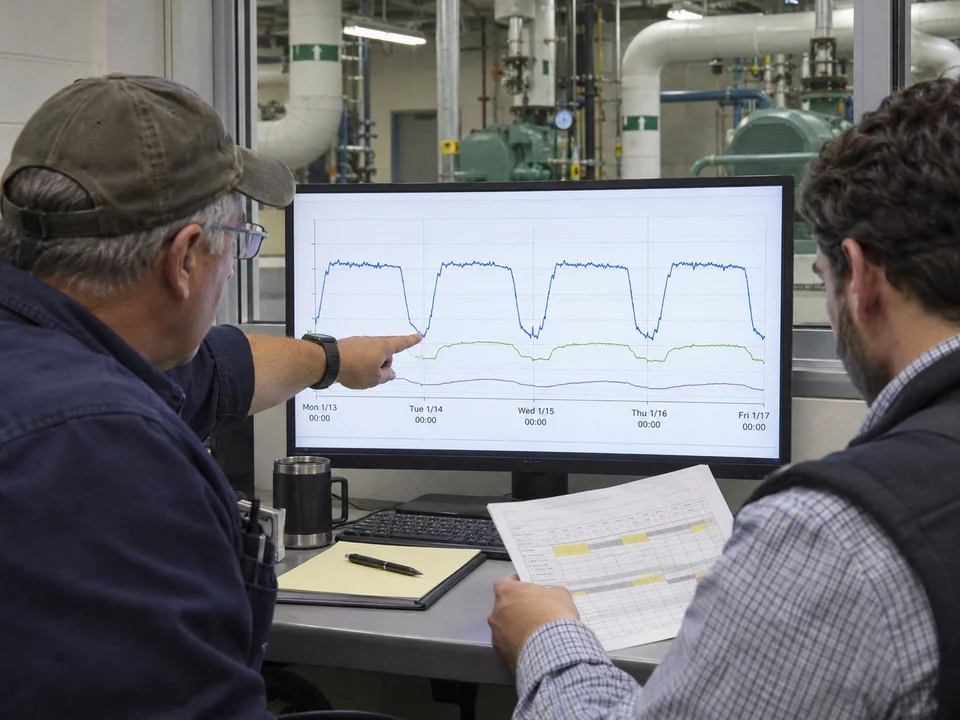
Keep the requirements current. Agree what good performance means as the facility’s use and conditions change.
Keep responsibility visible. Give each finding an action owner, a response path and a verification record.
Keep the result in view. Update the operating information and review whether the improvement holds.
ONGOING Cx IN PRACTICE
Follow the review through field investigation, agreed action and verification. Hover or focus to pause; select a step to keep it in view.
01 / Review
Look for changes in schedules, load, comfort and system response. Record the indication and the conditions around it.
A dated review with the equipment, operating mode and supporting observations.
MBCx can support this continuing process with monitored evidence. The review cadence, field work and response responsibilities are set for the program. Any savings claim also needs an appropriate baseline and a record of relevant operating changes.
MONITORING-BASED Cx · MBCx
Operating data with a purposeTested at turnover and operating correctly under real load are two different questions.
Our MBCx plans connect the owner’s operating goals and approved sequences to BAS trends, meter data and meaningful key performance indicators (KPIs). We check the data, compare performance under relevant operating conditions, and turn findings into assigned actions. Each correction needs verification, with continued review to see whether the improvement holds.
See SLA’s monitoring and integration work
LEED and owner programs. MBCx can support the LEED Enhanced Commissioning monitoring pathway or a defined operational assignment. The applicable rating-system version, documentation, reporting cadence and responsibilities are established for each project.
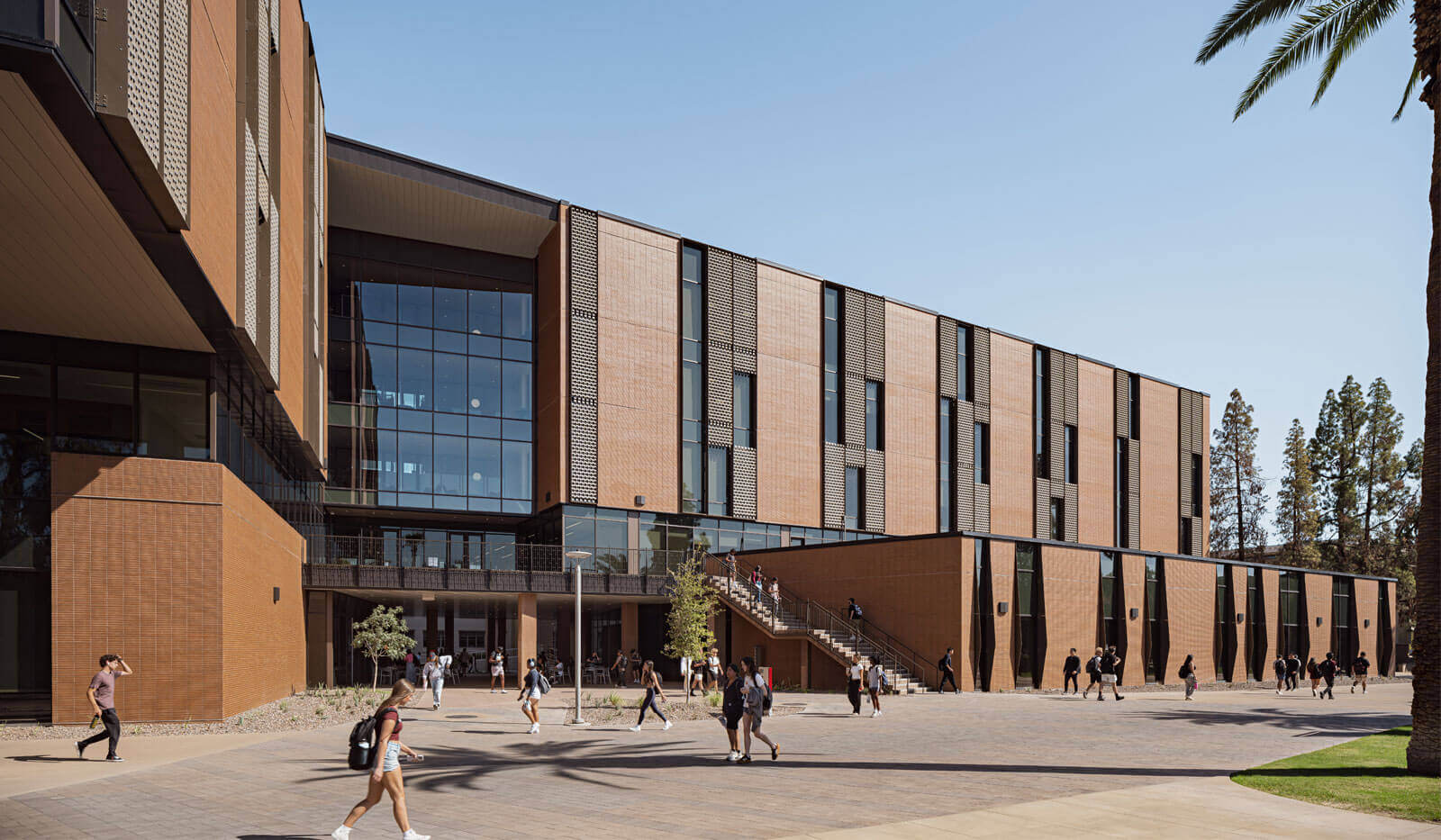
Start with the reliable points needed to answer the operating question. Trending every available point is not the objective.
Agree the operating question and required points. Check identity, units, timestamps, intervals, retention, completeness and sensor or meter evidence.
Define each KPI’s equipment or meter boundary, calculation, units and review period. Agree a baseline and investigation trigger that reflect relevant weather, occupancy, load and operating mode.
Investigate the finding with operating and field evidence. Record its impact, responsible party, next step and agreed verification criteria.
Review new data or targeted tests after correction. Record what was demonstrated and continue reviewing for recurrence.
ILLUSTRATIVE OPERATING EXAMPLE
A useful KPI is fan-running hours outside approved operating and support schedules during the review period. Use reliable status data, expose missing intervals and confirm exceptions with the facilities team. A legitimate overnight need, a hidden override and stale data require different responses.
Your team receives KPI definitions, data-readiness and baseline records, an active issues log, performance summaries and verification records. Fault detection and diagnostics (FDD) software can help prioritize review within the MBCx process. An alert starts an investigation; it does not establish the cause or authorize a controls change. Software, analyst coverage, review cadence and response commitments follow the agreed scope.
BUILDING ENCLOSURE Cx · BECx
The building’s first line of performanceRoofs, walls, windows and foundations have to work together to manage air, water, vapor and heat.
BECx connects the owner’s enclosure requirements with design details, material selections, installation and performance verification. The transitions deserve particular attention: roof to wall, window to opening, penetrations, material changes and below-grade connections.
We bring the team back to the practical questions: where do the layers connect, who is responsible for each interface, and what evidence will demonstrate performance?
Marcus brings building enclosure expertise together with Cx, construction and building systems experience, connecting the detail in the drawing with the conditions in the field.
Explore enclosure Cx and assessment experience Explore Marcus’s background
Temperature differences need context. Follow the indication with the appropriate inspection or testing before concluding that moisture or air leakage is present.
BEFORE CONSTRUCTIONCan the details be built and verified?
BEFORE CONCEALMENTHave we checked the connections?
BEFORE ACCEPTANCEWhat does the evidence demonstrate?
FOLLOW THE CONTROL LAYERS
The enclosure review follows the control layers through details, joints and changes in material. A good product still needs the right connection to the next assembly.
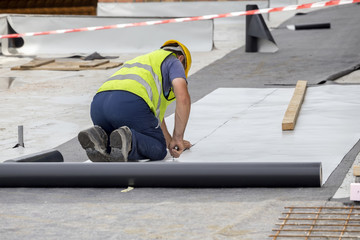
Review membrane seams, terminations and changes in material before the next layer conceals them.

Connect flashing, seals and adjacent control layers. Coordinate the mockup and test conditions.
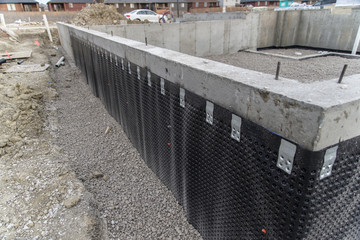
Check continuity, protection and transitions while the waterproofing can still be observed.
DESIGN THROUGH HANDOFF
Bring BECx into the project while requirements, details and responsibilities can still be coordinated. Tie observations and testing to the construction sequence.
Establish the Owner’s Project Requirements, enclosure scope, acceptance criteria and responsibilities in the BECx plan.
Follow the control layers, interfaces, material compatibility and installation sequence. Track review comments with the design and construction teams.
Agree representative assemblies, test methods, conditions and specialist assignments before installation proceeds.
Schedule field observations while critical connections remain accessible. Record the location, condition and next action.
Review specified air, water and other performance tests against project criteria. Follow findings through correction and the appropriate retest.
Bring together results, unresolved items, maintenance information and agreed warranty-phase follow-up for the owner’s team.
Start with the intended enclosure performance. Coordinate reviews, mockups, field observations and testing with the work, including connections between new and existing assemblies.
Start with the reported condition, available records and operating history. Define an investigation around leaks, condensation, comfort or enclosure performance, then verify the agreed corrective work.
THE ENCLOSURE SERVES THE FACILITY
Campus buildings, laboratories, healthcare, data centers, industrial facilities, civic buildings and the places people live and work bring different operating conditions. We shape the enclosure scope around the facility’s use, exposure, indoor conditions and maintenance needs.
A RECORD THE OWNER CAN USE
The agreed BECx scope brings the plan, review comments, location-based field observations, photographs, test reports and issue record into a traceable handoff. Findings stay connected to their responsible party, correction and verification.
Open items, deferred testing and maintenance responsibilities stay visible so the operating team knows what comes next.
Observation, infrared investigation and air or water testing answer different questions. The Cx plan identifies the applicable criteria, specialist testing assignments, design responsibilities and owner acceptance process. BECx supports the project’s design and construction responsibilities; it does not replace them.
Discuss your enclosure scopeProcess references: ASTM E2813, ASTM E2947 and BCxA BECx Best Practices. Building science: ASHRAE Building Envelopes. Applicable editions, test methods and acceptance criteria follow the project requirements.
ELECTRICAL Cx
Power, protection and connected systemsA powered facility still needs evidence that its electrical systems will support the required operating conditions.
SLA coordinates electrical Cx from the defined power paths and operating requirements through installation readiness, specialist test records, startup, functional testing and integrated systems testing. The Cx plan identifies the equipment, interfaces, expected response and parties responsible for each activity.
The agreed scope may include switchgear and switchboards, transformers, protective devices, ATS/STS, generators and paralleling, UPS and batteries, PDUs/RPPs, busway and rack distribution, grounding/bonding, control power, meters and EPMS. Required specialist tests remain assigned to the qualified providers performing them.
For a data center, power, cooling and controls must be assessed together. A successful transfer alone does not demonstrate cooling recovery, available control power or accurate operator information. We help plan the shared scenario and follow the evidence through the connected systems.
See SLA’s Central Plant electrical Cx work
Explore electrical Cx experience
Explore electrical Cx scope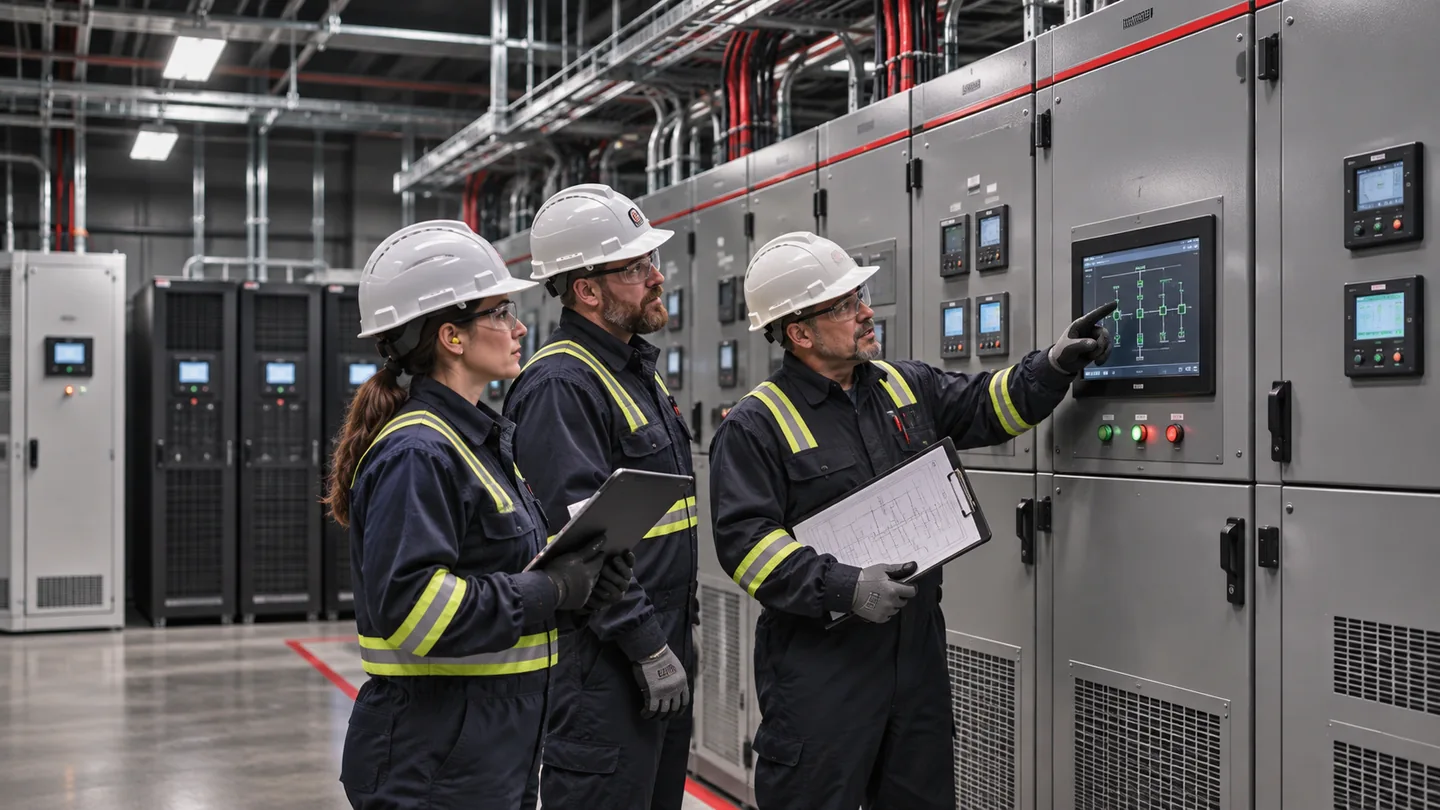
Define the required recovery and the evidence needed across all participating systems before the test.
Review approved drawings, settings, installation checks, specialist reports and startup records against the next planned activity.
Coordinate functional and integrated tests, record observations and keep findings connected to correction and retest.
Provide readiness status, witnessed results, interface findings and turnover records, including unresolved restrictions and assigned follow-up.
Cx coordination, witnessing and verification do not replace installation, specialist acceptance testing or equipment operation. Qualified, authorized parties perform switching and testing under approved procedures, risk assessment and site safety controls. The owner’s designated authority makes acceptance decisions.
LIGHTING & LIGHTING CONTROLS
We ask about lighting controls when we define every building commissioning scope. Where lighting is included, we test the agreed sequence in the rooms it serves.
What your operators receive. For the zones in scope, we record the expected and observed response, applicable settings, override behavior and any open retests.
Talk with Mike or Marcus about lighting controls
Before joining SLA, Marcus’s work included fifth-floor lighting controls at the Inter-American Development Bank headquarters in Washington, D.C., and lighting functional-test documentation at Ko‘ula in Honolulu.
The U.S. Energy Information Administration estimated that lighting accounted for about 17% of electricity used in U.S. commercial buildings in 2018. Actual use depends on the building. Read the EIA estimate.
DATA ASSURANCE Cx · DACx
Developed by Marcus MyersIs your data correct? Would you know if it wasn’t?
SLA installs controls, integrates building systems and verifies the data your operators use. With Data Assurance Cx, we follow a measurement from the field device to the screen where your team makes a decision.
Take a power meter. The dashboard can show a believable load even when the current transformer ratio is wrong. We check the meter setup, compare the reading against a field reference and trace it into your energy information system. If the values disagree, we pinpoint where they diverge and retest after correction.
At turnover, you can see who installed the equipment, who tested and witnessed it, which readings you can rely on, and what still needs attention. Your team has the evidence to make the acceptance decision.
Talk with SLA about verifying your system
Verify the installed measurement location, sensor suitability and range. Review calibration or verification evidence, and compare with appropriate reference measurements where the plan requires them. Confirm the asset, units and condition represented.
Trace the tested source through point naming, units, scaling and mapping. Check timestamps and quality flags, then compare the value at the operating screen and the related control response.
Provide a point crosswalk, validation records and assigned exceptions. Distinguish verified measurements from unverified, stale, missing or unreliable values before they support operating or investment decisions.
DACx is SLA’s named verification approach developed by Marcus Myers. It is not presented as a published ASHRAE standard or an independent certification.
The targeted EIS and metering Cx assignment connects installation readiness, point-to-point checks, meter identity and functional-verification planning to the owner’s operating-data handoff.
Explore the MRI metering assignment
COMPLEX FACILITIES. CONNECTED SYSTEMS.
A component can pass its individual check while an important system interaction remains unproven. Critical facilities make those connections especially consequential.
Connect power, cooling, controls, monitoring and the agreed operating scenarios. Define the acceptance stages and prerequisites, then carry the evidence into integrated systems testing and operational handoff.
Follow utilities, automation and support systems to their points of connection. Align facility readiness with supplier requirements, process interfaces and the owner’s acceptance criteria. Facility Cx and process qualification have distinct responsibilities.
Marcus chairs ASHRAE Guideline 1.7P for semiconductor facilities and participates in Guideline 1.6P for data centers. That standards work complements the field and project experience behind SLA’s approach.
DATA-CENTER Cx LEVELS & READINESS
Use the stage to connect the equipment, the responsible teams and the evidence for the next activity. Planning and design establish the basis for the acceptance-testing stages. Together, they connect owner requirements to documented system response within the wider Cx process.
Illustrative project legend: L1 red · L2 yellow · L3 green · L4 blue · L5 white. The owner and project team define the levels, colors, evidence and release authority in the Cx plan. This is not a universal ASHRAE color requirement. A Cx status tag does not authorize energization.
FROM DESIGN INTENT TO INTEGRATED RESPONSE
Planning makes later testing meaningful. Define the required response, the interfaces and the evidence early, while the team can still resolve gaps before procurement and installation.
Illustrative project sequence. Follow the signal or select a level to hold its explanation. This shows how evidence carries forward, not live project status.
WHAT CARRIES FORWARD
Owner requirements, design decisions, review comments and the Cx plan become the basis for later checks.
BEFORE THE NEXT ACTIVITY
Are requirements measurable, responsibilities assigned and unresolved design issues tracked?
L0 / PLANNING & DESIGN
Define what must work, how it will be verified and who is responsible.
An integrated test is only useful when the team knows the required operating response. Early Cx review helps identify conflicting requirements, missing interfaces and testing constraints before they become field problems. The design team remains responsible for the design; Cx reviews and verifies the agreed requirements and process.
Document operating needs, performance targets, loads, modes, maintainability and the conditions the facility must support in the Owner’s Project Requirements.
The design team explains how its proposed systems and sequences address those needs in the Basis of Design. Track changes against the OPR.
Review the OPR/BOD relationship, system interfaces, access for maintenance and testability. Record comments, responsible parties and their resolution.
Define equipment, systems, boundaries and exclusions. Assign who prepares, performs, witnesses, reviews and accepts each required activity.
Set measurable acceptance criteria, required operating conditions, prerequisites and the approach to factory, functional and integrated tests. Develop and refine procedures as the design progresses.
Agree the level definitions and color legend, asset identification, required records and release authority. Assign issues, track resolution and record any accepted restrictions.
Handoff check: Carry agreed requirements, measurable criteria, assigned responsibilities and tracked design issues into procurement and subsequent verification.
L0 is a planning/design label used in some data-center programs. The project’s contract and Cx plan establish its meaning and required records; it is not a universal ASHRAE level designation.
Review the specified equipment performance and configuration before shipment.
Handoff check: Review the required factory evidence and exceptions before the planned shipment or next activity.
Check that the delivered and installed equipment matches the approved requirements.
Handoff check: Identify remaining installation restrictions and prerequisites for authorized startup.
Establish component and subsystem operation before broader functional testing.
Handoff check: Confirm the defined system is stable and ready for the approved functional tests.
Demonstrate each system’s required sequence under the agreed operating conditions.
Handoff check: Review the participating systems and remaining dependencies before the selected IST scenario.
Demonstrate the combined response of power, cooling, controls and monitoring.
Handoff check: Carry the demonstrated response, remaining restrictions and next actions into the defined handover.
L6 is a supporting lifecycle label used in some project programs. Organize accepted records, training, operating information, open restrictions and deferred or seasonal verification. The owner’s agreed turnover process governs acceptance and continuing responsibilities.
ASSET IDENTIFICATION & READINESS TAGGING
Define the tagging system during L0. Agree what each status means, which records support it and who can authorize a change before tags are used in the field.
A permanent asset ID identifies the equipment. A Cx status tag communicates a defined stage supported by records. Use words as well as color, and distinguish completed testing from readiness for the next activity.
Link the physical label, drawings, controls name, report revision, reviewer, review date and restrictions. Assign who records, reviews and approves each change. After equipment, wiring, settings or software changes, reassess the affected evidence and retest needs.
ILLUSTRATIVE STATUS RECORD
Project records also identify the responsible parties, report revision, review date and acceptance authority.
Keep the authorities separate. Cx status tags are not lockout/tagout devices or operating permits. They do not authorize energization, switching, access or removal of hazardous-energy controls. Applicable safety procedures and qualified, authorized personnel govern those activities. Level completion does not establish Tier or LEED certification.
These explain the wider Cx process and project variation. Your contract and Cx plan establish the applicable requirements.
BCxA: acceptance-testing levels and the wider Cx process ↗Uptime Institute: mission-critical Cx and integrated testing ↗PROJECT-SPECIFIC DETAIL
Facility conditions, system responsibilities and project requirements shape the final assignment. These guides add detail to the services above.
Data centers
Readiness depends on the load, operating modes, transitions and recovery conditions the owner needs to demonstrate. An equipment test alone may not show how the connected facility responds.
POWER / LOAD / COOLING / SELECT A CONNECTION
Review the planned supply paths, controls power and required transitions with the responsible electrical team. Equipment readiness and integrated response need connected evidence.
Use the owner’s required load and operating modes to establish the verification basis. Do not infer facility readiness from one successful component test.
Review cooling availability, permissives, alarms and recovery criteria alongside power conditions. Qualified, authorized parties control any switching or live testing.
Illustrative relationships. Scope and acceptance evidence are agreed for each project. No connection to live equipment.
A coordinated readiness and test plan, interface responsibilities, observed results and findings that show what remains unresolved.
The planned verification should account for cooling availability, controls power, permissives, communications and alarms, along with the authorized recovery criteria. Switching and specialist testing stay with qualified, authorized parties.
Semiconductors
Utility availability is not the same as demonstrated quality, stability or operating response. Facility systems, equipment packages and process acceptance meet at boundaries that need clear ownership.
UTILITIES / ENVIRONMENT / PACKAGE / SELECT A CONNECTION
Identify required utility quality, stability and interface evidence. Availability alone does not establish suitability for the process.
Connect the agreed environmental criteria with readiness, monitoring and verification responsibilities for the space.
Define the facility boundary and the package provider’s responsibilities. Process acceptance or specialist qualification is separate unless expressly included.
Illustrative relationships. Scope and acceptance evidence are agreed for each project. No connection to live equipment.
Defined facility conditions, package-interface responsibilities, readiness records and verification evidence for the agreed scope.
Compare the required conditions with the documented evidence at the interface. Define which party verifies facility delivery and which party accepts the process equipment. Production acceptance and specialist process qualification are separate unless expressly included.
Campuses & research
New buildings and renovations have to fit campus utilities, owner platforms, metering conventions and the facilities team’s operating practices.
PLANT / BUILDINGS / PLATFORM / SELECT A CONNECTION
Review the connection between utility delivery, building demand and the conditions needed by the campus operating team.
Connect new work and renovations to existing operating requirements, metering boundaries and owner naming conventions.
Verify point identity, units, mapping and timestamps. A network connection does not prove the campus team can use the information.
Illustrative relationships. Scope and acceptance evidence are agreed for each project. No connection to live equipment.
Coordinated interface and data requirements, Cx records and information that the campus team can use after turnover.
A network connection does not prove that names, units, graphics and meter relationships are correct. Trace the owner’s information needs through installation, mapping and verification.
Central plants
Chillers, pumps, thermal storage, electrical supplies and controls interact. Verification needs to address the required plant response and its prerequisites.
CHILLERS / PUMPS / STORAGE / SELECT A CONNECTION
Connect equipment readiness with plant demand, electrical dependencies and the agreed sequence.
A command or running indication does not establish flow. Review the measurement, valve conditions and sequence context.
Define required modes, transitions and supporting conditions. Verification must use approved procedures and the responsible operators.
Illustrative relationships. Scope and acceptance evidence are agreed for each project. No connection to live equipment.
A coordinated sequence and interface review, readiness records, agreed verification criteria and traceable findings.
A command and a running indication are different from demonstrated flow. The evidence needs context: the measurement, valve conditions, sequence and required operating response. Any field test requires approved conditions and responsible operators.
Industrial & process
Package equipment, PLC logic, drives, signals and operator displays need to describe the same operating reality, especially during retrofits or staged changeovers.
INSTRUMENT / LOGIC / PROCESS / SELECT A CONNECTION
Trace the source, range and units to the documented process requirement. A plausible display can still represent the wrong point.
Review permissives, vendor interfaces and alarms against the intended operating sequence.
Coordinate readiness, authorized change windows and evidence. Separate Cx verification from controls implementation and specialist process work.
Illustrative relationships. Scope and acceptance evidence are agreed for each project. No connection to live equipment.
Traceable interfaces, assigned correction responsibilities and evidence tied to the process requirements within the agreed Cx scope.
Review source identity, units, scaling and sequence context before drawing a conclusion. Keep Cx verification distinct from the authorized controls implementation, maintenance and specialist process work.
Healthcare & laboratories
Clinical and research spaces have specific environmental and operating needs. The required conditions and consequences of a failure guide the Cx scope.
VENTILATION / SPACE / ALARMS / SELECT A CONNECTION
Review the mechanical, electrical and controls dependencies needed for the space’s agreed operating modes.
Use the project’s environmental criteria, purpose and prerequisites to define evidence. Cx alone does not establish licensing or biosafety certification.
Agree indication, notification and responsible action with the owner and relevant specialists. Record the evidence required for handoff.
Illustrative relationships. Scope and acceptance evidence are agreed for each project. No connection to live equipment.
Testable requirements, coordinated responsibilities and evidence tied to the particular space and agreed systems.
Start with the design criteria, operating needs and prerequisites. Determine what evidence is needed and which specialists provide it. Cx does not by itself establish clinical licensing, biosafety certification or process qualification.
Public safety & government
Emergency communications and institutional facilities need coordinated power, cooling, controls and recovery, supported by clear records and owner requirements.
POWER / SERVICE / RECOVERY / SELECT A CONNECTION
Identify the required supply and supporting-system conditions for the owner’s critical service.
Use the service requirement to organize responsibilities and verification. A completed checklist does not prove the complete operating service.
Coordinate authorized test conditions, response criteria, remaining dependencies and the receiving team’s records.
Illustrative relationships. Scope and acceptance evidence are agreed for each project. No connection to live equipment.
A coordinated verification basis, a record of demonstrated conditions and a clear list of remaining dependencies and actions.
Use the owner’s requirement to identify supporting systems, authorized test conditions, response criteria and evidence. A completed equipment checklist should not be treated as proof of the complete service.
Commercial & hospitality
Occupancy, schedules, comfort, maintainability and changing use affect whether the installed systems achieve their purpose.
SCHEDULE / OCCUPANCY / PERFORMANCE / SELECT A CONNECTION
Review occupied, unoccupied and exception schedules with the operator before interpreting a trend as a fault.
Consider the purpose of the space, load and operating modes when defining what the systems must demonstrate.
Prioritize observed concerns, agree corrections and retain evidence for the next operating decision. Do not assume savings from a pattern alone.
Illustrative relationships. Scope and acceptance evidence are agreed for each project. No connection to live equipment.
Requirements linked to actual use, prioritized findings and verification records that support the facilities team’s next decisions.
Review how the agreed sequences address different loads and schedules, and how the team will verify those modes. An illustrative scenario is not a claim of measured savings or a completed client result.
Airports & aviation
Terminal work, support buildings and baggage interfaces bring multiple providers into an operating environment. Cx connects the agreed requirements, phasing and evidence needed for handover.
Review the complete handoff: the demonstrated system response, current configuration, remaining constraints and the people responsible for operation. Airport-specific acceptance and specialist system duties stay with the parties assigned in the project scope.
Electrical readiness, power-system verification and connected response are explained in the visible scope above.
Read electrical Cx scope →Cooling, heating, ventilation, process utilities and controls. Follow the dependencies between equipment, sequences and delivered operating conditions.
Review the required conditions and interfaces across heating, cooling, ventilation, process utilities and controls. Confirm prerequisites, sequence expectations and vendor responsibilities. Coordinate approved tests around the delivered system response, then document findings, corrections and retests. Contractor startup, TAB and manufacturer activities keep their defined responsibilities.
Inspection plans, observations, issue ownership, prerequisites, corrections and verified closure. Cx coordinates with contractor QC and specialist testing while preserving their defined responsibilities.
Define observations and readiness checks, record the requirement and affected location, and assign the response. Track correction separately from verification. Document retest evidence, open restrictions and deferred work before the next milestone. Cx quality assurance supports the project while contractor quality control and design responsibility remain explicitly assigned.
LEED is a building certification program. The Cx work must follow the rating system, version and credits registered for your project. A general request for “LEED commissioning” is not enough to define the assignment.
For an owner pursuing LEED on a new building, major renovation or other eligible project, begin with the project scorecard and registration information. Confirm the applicable prerequisites and any enhanced Cx, enclosure or monitoring-related options before pricing or scheduling the work.
Review the registered version, selected credits, systems included, Cx provider qualifications and reporting relationships. Distinguish the required baseline from additional credit work.
Review the owner’s project requirements (OPR) and basis of design (BOD). Coordinate the Cx plan, design and submittal reviews, readiness, functional verification and issue resolution within the selected scope.
Organize the required records and Cx submissions with the certification team. Identify any training, systems-manual, post-occupancy or monitoring obligations that belong to the chosen path.
SLA supports the Cx portion of the certification effort. LEED certification is determined through the certification review process; it is not issued by SLA. Options and requirements differ by rating system and version.
Title 24 contains multiple parts of California’s building regulations. The Energy Code is Part 6; CALGreen is Part 11. A project can have requirements under both. Cx, acceptance testing, design review and closeout documentation must be assigned to the correct parties.
For a California project, establish the applicable edition, permit timing, building type and scope before deciding what is required. The 2025 Energy Code includes nonresidential Cx provisions in Section 120.8; applicability and exceptions must be checked for the specific project.
Coordinate with the design and code-compliance team to identify Cx provisions, required design reviews, acceptance tests, forms and responsible providers. Do not treat every project as having the same requirements.
Connect the applicable requirements to design records, the Cx plan, system prerequisites and documented functional performance. Schedule specialist acceptance testing with appropriately qualified providers where required.
Track required reports, systems information, training records and outstanding findings. Make the document owner and submission route clear before the permit or handoff milestone.
Cx coordination does not automatically qualify a provider to perform every regulated acceptance test. The project must confirm required credentials and responsibilities. The enforcement agency retains its approval authority.
The model code named in a specification is only part of the picture. State and local adoption, amendments, the permit basis and the project’s systems determine the requirements to review. Examples can include an adopted IECC or ASHRAE 90.1 compliance path, as applicable.
Use this review when planning a new facility, renovation or system replacement, particularly when the team works across several jurisdictions. An approach accepted on a previous project may not establish what this project needs.
Ask the responsible design and code-compliance team to establish the adopted editions, local amendments, project classification and authority having jurisdiction (AHJ). Document unresolved interpretations for that team to resolve.
Identify the Cx activities, systems, prerequisites and evidence within SLA’s assignment. Distinguish functional verification from contractor QC, startup, TAB, special inspections and other specialist tests.
Assign each report or certificate to its responsible party. Connect open findings, retests and missing records to the next approval or turnover milestone.
SLA helps coordinate the Cx work and evidence within its agreed scope. Code interpretation, design compliance and permit approval remain with the responsible design professionals and authorities. A Cx report does not replace those decisions.
ASHRAE Guideline 0 describes Cx for new buildings and new systems, beginning with the Owner’s Project Requirements. Guideline 0.2 addresses existing buildings, systems and assemblies using the owner’s Current Facility Requirements. Standards 202 and 230 establish Cx process requirements for new and existing work, respectively. Guideline 0.3P is the proposed ongoing Cx guideline and remains in development. Confirm the applicable publications, editions and project requirements.
Use a defined process when the team needs a common basis for planning, reviewing, verifying and documenting performance. A standard can be required by an adopted provision or contract; a guideline may also be selected as the project’s agreed approach.
For new work, review the OPR and the design team’s BOD. For existing facilities, establish current facility requirements and the records available to support the investigation.
Set the Cx scope, roles, review stages, readiness conditions and verification criteria. Connect each planned activity to a requirement and an identified responsible party.
Record observations, coordinate correction and retest, and distinguish demonstrated performance from work still awaiting evidence. Carry the agreed information into operator handoff and follow-up.
A draft or proposed guideline is not a published requirement. Referencing ASHRAE does not mean ASHRAE endorses SLA or certifies the project. Technical acceptance criteria remain specific to the applicable design, requirements and scope.
Owners can require more than the adopted code or a certification program. GSA publishes federal facility criteria and Cx guidance; universities, healthcare organizations and other owners may define their own standards for systems, documentation, integration and operating handoff.
Use this approach when the project must connect to an established owner environment or meet contract-specific criteria. Confirm the documents and revisions incorporated into the project, including applicable GSA criteria where relevant. Do not assume that one owner’s requirements apply to another.
Review the contract criteria, OPR, technical standards and receiving team’s needs. Identify conflicts, missing scope and questions requiring the owner’s direction.
Assign interfaces between Cx, design, construction, controls, MSI and operations. Where included, translate Division 25, naming, point data, metering and platform expectations into coordinated responsibilities.
Organize accepted records, open items, systems information and training evidence. Agree who owns follow-up and how outstanding restrictions reach the operating team.
Owner criteria and acceptance authority are project-specific. Total building Cx still requires explicit system boundaries and qualified specialists for their assigned work. SLA’s services and deliverables are established in the agreed engagement.
A semiconductor tool depends on the facility services and support equipment around it. The interface record needs to connect the supplier’s utility requirements with the installed facility and the owner’s acceptance criteria. SEMI F122 provides guidance for facilities data packages, including utility connections and interconnections between equipment.
Use this guide for a new fab area, tool installation, utility expansion or package-equipment change. Confirm which facility systems, tool interfaces and specialist reviews are included. Facility Cx and process or product qualification are distinct assignments.
The project interface register can address the following, where relevant to the approved scope. The design, supplier and owner establish the actual values and limits.
Compare the supplier’s facilities data package with approved drawings, utility schedules and owner requirements. Record mismatches for the responsible design and supplier teams to resolve.
Identify the required installation, quality, specialist testing and documentation prerequisites. Assign who provides each record and who reviews it before the next milestone.
Connect authorized verification results, exceptions and approved changes to the correct tool and utility. Keep facility acceptance separate from tool performance and process qualification.
SEMI publications are industry standards and guidelines, not blanket regulations for every fab. Confirm the selected documents, editions and their project adoption. Cx coordination does not replace the owner’s process qualification, supplier obligations or qualified safety and specialist evaluations.
Clear responsibilities matter. Cx coordinates with contractor quality control, manufacturer startup and the design team. The owner retains acceptance authority; electrical switching and specialist testing remain with qualified, authorized parties.
LET’S TALK ABOUT YOUR FACILITY
A new building, an operating concern or a system that needs to be understood. Tell us what you are trying to accomplish and where the team needs support.